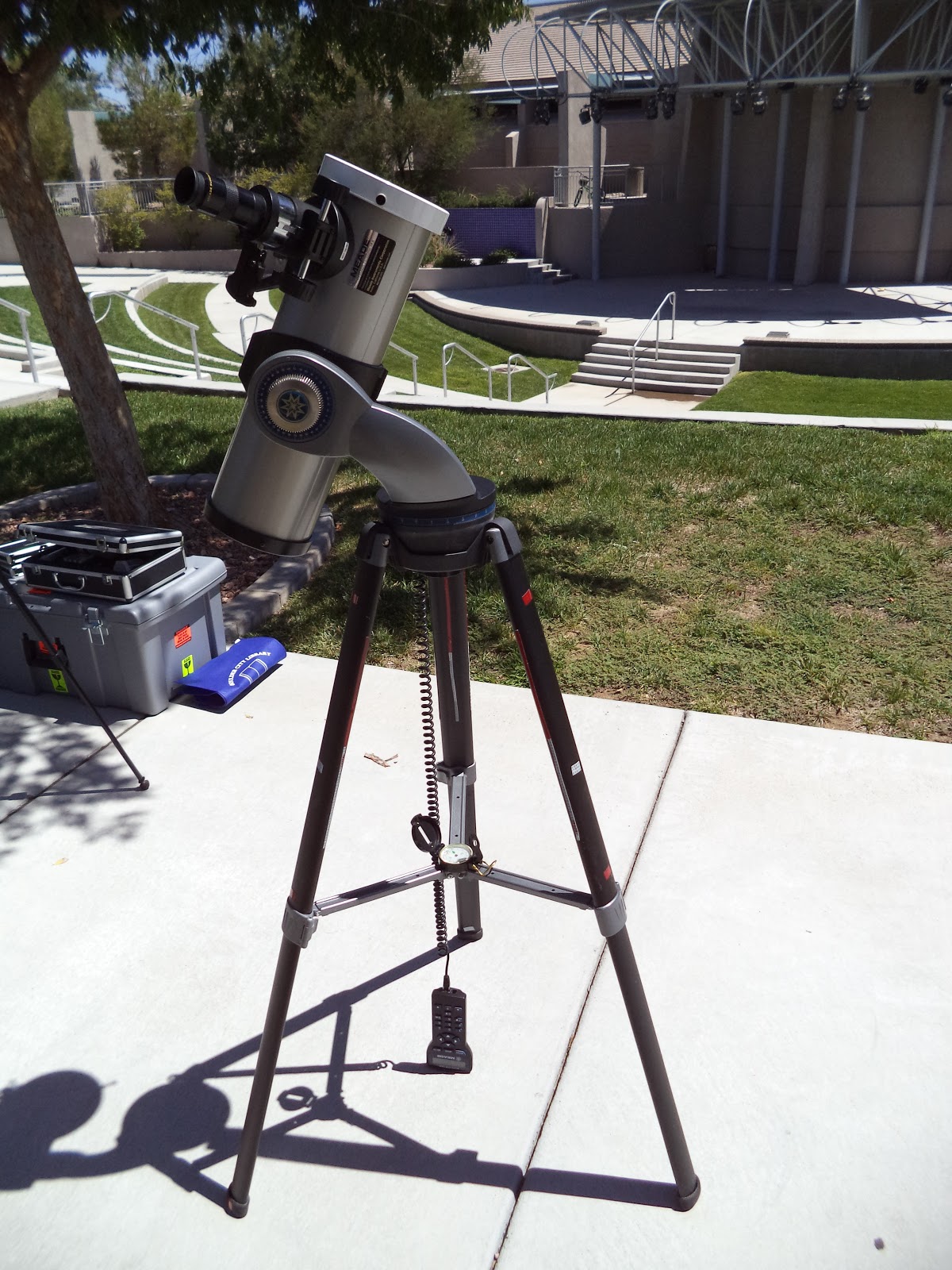
Here you have some photos we took during the eclipse, I hope you like.
Thanks for visiting my blog, I have created this blog for sharing with all internet users of the Cyberspace, my hobbies and thoughts, you can find my blogs about astronomy, philosophy, video games, books, PCs and laptops, mobiles and more . As well I hope that you share your experiences and ideas with me through the blogs. Hope to hear from you ... Views expressed here are not supported by any of the organizations that I support
Mostrando entradas con la etiqueta Astronomía. Mostrar todas las entradas
martes, 15 de abril de 2014
lunes, 14 de abril de 2014
Lunar eclipse April 2014
April 2014 Lunar Eclipse
A total lunar eclipse will occur on the morning of April 15, 2014, the first of two total lunar eclipses of the year. This eclipse begins a series of four total eclipses, with a difference of about six months, called tetralogy of eclipses or later Eclipses Moons blood.1 tetrad will be those of October 8, 2014, April 4, 2015 and September 28, 2015.
The eclipse will be visible on April 15 in the Pacific Ocean, including Australia, and North and South. The moon will pass south of the center of the shadow of the Earth. As a result, the northern part of the moon will be noticeably darker than the southern part. It will happen during the upward phase of the orbit of the moon, part of Lunar Saros 122.
Observation:Because the moon is not necessary, go to any special place to observe this event, it is important to be in a comfortable and safe place.The lunar eclipse will occur in the constellation Virgo (ie to the southeast), close to the star Spica, we also have the planet Mars nearby.
On the other hand, if you prefer, Griffith Observatory broadcast the eclipse live on the Internet at the following address http://www.griffithobservatory.org/exhibits/special/Lunar_Eclipse_April_2014.html?oeidk=a07e8zhut3o95c8bff8&llr=iz57rbcab
Key moments:The most important point to note is 11: 00-12: 0020:54 start penumbralPartial begins 21:58Total starts 23:07Half of the eclipse 23:47Total ends 12:25 a.m.Ends partial 1:33 a.m.Ends penumbral 2:38 a.m.
A total lunar eclipse will occur on the morning of April 15, 2014, the first of two total lunar eclipses of the year. This eclipse begins a series of four total eclipses, with a difference of about six months, called tetralogy of eclipses or later Eclipses Moons blood.1 tetrad will be those of October 8, 2014, April 4, 2015 and September 28, 2015.
The eclipse will be visible on April 15 in the Pacific Ocean, including Australia, and North and South. The moon will pass south of the center of the shadow of the Earth. As a result, the northern part of the moon will be noticeably darker than the southern part. It will happen during the upward phase of the orbit of the moon, part of Lunar Saros 122.
Observation:Because the moon is not necessary, go to any special place to observe this event, it is important to be in a comfortable and safe place.The lunar eclipse will occur in the constellation Virgo (ie to the southeast), close to the star Spica, we also have the planet Mars nearby.
On the other hand, if you prefer, Griffith Observatory broadcast the eclipse live on the Internet at the following address http://www.griffithobservatory.org/exhibits/special/Lunar_Eclipse_April_2014.html?oeidk=a07e8zhut3o95c8bff8&llr=iz57rbcab
Key moments:The most important point to note is 11: 00-12: 0020:54 start penumbralPartial begins 21:58Total starts 23:07Half of the eclipse 23:47Total ends 12:25 a.m.Ends partial 1:33 a.m.Ends penumbral 2:38 a.m.
miércoles, 20 de noviembre de 2013
Solar filters made with Baader opening AstroSolar material cell 18 constructed from lightweight aluminum and white powder coated filter Ga.
AstroSolar has been thoroughly tested for safety eye and has been approved by the National Bureau of Standards in Germany.
AstroSolar is essentially free of pores.
AstroSolar is constructed of lightweight aluminum and 18ga white powder coated.
Baader AstroSolar is unlike any other sunscreen on the market! The sun appears in neutral white when AstroSolar is used to provide the exceptional experience and observation. Other films and some glass filters produce blurred reddish or bluish solar images which in turn reduces spectrum. Faculae regions, which are visible especially in the blue wing of the spectrum, are very difficult to do with an orange sun. Due to the neutral color balance AstroSolar, you can use multiple colors (or interference) filters. This allows observers to focus on certain spectral bands for investigations of different layers within the solar "atmosphere" step.
The uniqueness of Baader AstroSolar not only in their ability to observe the sun using one of the best filters out there, but also thanks to the dedication in what is one of the safest of all filters. All processes related to this product have been tested carefully and coatings are inspected continuously to maintain consistency to ensure eye safety. In addition, the National Bureau of Standards of Germany, the PTB has approved Baader AstroSolar for eye safety.
AstroSolar is essentially free of pores. Due to the layer on both sides, the probability that two superposed holes is extremely weak one another. There can be a time when holes appear, but only 1 in 1,000 in the optical density of 2.5! Baader film AstroSolar cell filter is constructed with lightweight 18GA. aluminum and white powder coating. To ensure a secure fit, the cell has heavy filter threaded inserts and nylon thumbscrews.
AstroSolar is essentially free of pores.
AstroSolar is constructed of lightweight aluminum and 18ga white powder coated.
The uniqueness of Baader AstroSolar not only in their ability to observe the sun using one of the best filters out there, but also thanks to the dedication in what is one of the safest of all filters. All processes related to this product have been tested carefully and coatings are inspected continuously to maintain consistency to ensure eye safety. In addition, the National Bureau of Standards of Germany, the PTB has approved Baader AstroSolar for eye safety.
AstroSolar is essentially free of pores. Due to the layer on both sides, the probability that two superposed holes is extremely weak one another. There can be a time when holes appear, but only 1 in 1,000 in the optical density of 2.5! Baader film AstroSolar cell filter is constructed with lightweight 18GA. aluminum and white powder coating. To ensure a secure fit, the cell has heavy filter threaded inserts and nylon thumbscrews.
Suscribirse a:
Entradas (Atom)