Mostrando entradas con la etiqueta ASTRA. Mostrar todas las entradas

jueves, 24 de julio de 2025

A Night of Celestial Capture: An Adventure Journal

The firmament unfolded in a limpid and pure symphony, like a pristine canvas waiting to be filled with the brilliant brushstrokes of the universe. The night air was a gentle breeze, lulling the heavens into an almost ethereal state, perfect for the art of astronomical observation.


On this magical night, we captured stars and nebulas, each with its own story:


M11  Wild Duck Cluster


It looked like a frozen explosion. Its stars were packed so densely together that the background dissolved, like a grain of sand lit from within. Good seeing allowed its edges to be resolved like flares of ancient fire.


M25  Cluster in Sagittarius


Diffuse but vibrant. A swarm of faint lights that peeped out like whispers among the branches of interstellar dust.


M56 Globular Cluster


A grainy, remote sphere. Stars like floating ash trapped by millennia-old gravity.


M57  Ring Nebula


Like a ghost eye in the abyss, it offered its sharply edged blue ring.


IC 1318A  Bird Nebula


Tangled gas like the feathers of a cosmic bird. Photographed in Ha and OIII: a pure spectral symphony.


IC 5146  Cocoon Nebula


The interstellar chrysalis. Dust, gas, and stellar youth wrapped like velvet.


NGC 6888 Crescent Nebula


It was the ultimate challenge: violent filaments, diffuse edges, extreme contrasts. I managed to capture its shock waves like brushstrokes on fire.


NGC 7023  Iris Nebula


Blue reflections floating among dense dust. Like a flower glowing in infrared.


NGC 6530  Cluster in the Lagoon Nebula


A stellar maternity ward. The cluster appears newborn among fiery clouds.


NGC 7331  Galaxy in Pegasus


Like a sideways version of Andromeda, its spiral arms emerge from the background with galactic sobriety.


NGC 7380  Wizard Nebula


It seemed to conjure impossible shapes: towers of gas, pools of shadow.

domingo, 29 de junio de 2025

A Night of Celestial Capture: An Adventure Journal

On a night when the firmament was dressed in perfection, the heavens opened like the pages of an ancient book, ready to tell cosmic stories. The stars shone with the precision of the most meticulous watchmaker, and the night breeze gently caressed the earth.


M51, the Whirlpool Galaxy:


This celestial spiral, known as the Whirlpool, unfolds in space like a cosmic ballet. With its galactic arms outstretched, it appears to spin in an eternal waltz with its companion, M51a. The nighttime conditions were perfectly harmonious, allowing every detail of the chromatic swirl to be revealed in a visual dance. The clarity of the sky made its active centres shine, displaying the splendour of the supermassive black holes.


M101, the Chandelier Galaxy:


In contrast, M101 rises like a chandelier in the vast dark theater. With its distinctive, elongated shape, this galaxy gracefully displays the results of millions of years of star formation. Under the ideal nighttime cover, each of its luminous bursts stood out like a glow in the firmament.


I invite all night sky adventurers to join us on this celestial quest. Let's continue exploring the mystery of the universe, with our next target set on the majestic M81. Come, observe, and let your imagination soar alongside the stars.

lunes, 23 de junio de 2025

A Night of Celestial Capture: An Adventure Journal

 While the stars twinkled with an almost imperceptible brilliance, the air was charged with emotion, as if the universe itself were whispering secrets to me.


The objects I captured tonight are true gems of the cosmos:


M57 revealed its ionised gas structure with sculptural clarity. Grateful for atmospheric stability, its outline was captured in a single, precise exposure: the central star, elusive on more timid nights.


NGC 7023, the Iris Nebula


The bluish light danced among the dust filaments as if a galactic flower were opening its petals. Thanks to the low humidity, the reflections were not diluted: subtle gradients that normally elude us were able to be recorded.


.

jueves, 12 de junio de 2025

A Night of Celestial Capture: An Adventure Journal

 The air was still and fresh, a breath of spring that allowed me to breathe deeply and feel the excitement of the day.


HIP 65378/HIP 65477: Twin Star Pairs Mizar and Alcor


I approached them with a mixture of curiosity and respect. My first glance revealed two suns dancing around a common centre, as if sharing a secret. The scientific data told me they were twin star pairs, each with a similar mass and orbiting their own core. The sensation was one of awe at the complexity of their synchronous movements.


Nekkar (Boötes Beta): A Celestial Blade


Beyond them, I discovered a bright, blue star that looked like a sword in the sky. The technical information informed me that it was Nekkar, a class B9V star known for its intense stellar winds that strip away its atmosphere like a sharp blade. It was a moment of excitement at the creative fury of this star.


M3: An Explosion of Colours


And finally, I encountered the multicolored glory of M3, a planetary nebula that exploded in a shower of light and energy. The scientific description was as captivating as it was beautiful, reminding me of the magnificence of the universe.


And now, I invite you to immerse yourself in this universe of wonders, to explore the curves and mysteries of the firmament. Next destination: The Sagittarius Steam Engine! What secrets does its atmosphere hold?

lunes, 26 de mayo de 2025

A Night of Celestial Capture: An Adventure Journal

 The night of May 25, 2025, presented ideal conditions for an unparalleled astronomical adventure. The sky was a dark silk canvas, freshly stretched and perfectly illuminated by the stars.


M108: A Galaxy on Fire


I approached M108, a spiral galaxy that leapt across the sky like a will-o'-the-wisp. Its cusped arms extended toward me, as if inviting me to dance among the stars. With a diameter of 60,000 light-years, this active galaxy was in full swing, with bursts of energy illuminating its surroundings.


M63: A Stellar Eye


Next, I encountered M63, a spiral galaxy that shone like an inquisitive eye. With an estimated mass of 50 trillion tons, this galaxy was a giant in the firmament. Its larger arm was filled with young, active stars, creating a light show that took my breath away.


If you wish to immerse yourself in this universe of wonders,

domingo, 25 de mayo de 2025

A Night of Celestial Capture: An Adventure Journal

 Today, the night sky became a canvas of brushstrokes of light and darkness. The stars shone with an almost furtive intensity, as if they were secrets shared between them. The wind whispered faint warnings, but the moon, serene and motionless, reminded us that the universe continues its inexorable course.


Captured:


M4, a globular cluster of ancient stars, is more than 12 billion years old. Its thermal radiation spoke to us of the icy nature of space.


M19, another globular cluster, but this time in the constellation Ursa Major, shared its secrets about star formation in extremely dense environments.


M80, an open cluster, showed us its splendorous dance of young and old stars, reminding us that the cosmos is constantly changing.


M102, a planetary nebula, shared its stories of stellar life and death, leaving behind a legacy of heavy elements in the universe.


And M97, also known as the Egg Nebula, showed us its peculiar shape and color, speaking of the interaction between stars and their surroundings.


Come and see! The night offers countless secrets if we know where to look. What celestial object do you want to discover next?

viernes, 2 de mayo de 2025

A Night of Celestial Capture: An Adventure Journal

 I woke up at dawn, but it wasn't the light of dawn that called me to adventure. It was the Moon. It was May 1, 2025, and I was ready to capture the secrets of the universe.


The night was cool and serene, with ideal conditions for astronomical observation. I turned to my telescope, that great eye that allows me to discover the mysteries of the cosmos.


Captured:


The Moon, in its crescent phase (22%), shone with a soft, warm light, as if calling me to explore its secrets. (Science fact: the Moon is about 384,400 kilometers away from Earth.)


M13, a majestic star cluster with more than 300,000 stars crammed into a single celestial object. Its beauty took my breath away.


M81 and M82, two spiral galaxies that seemed to dance in the night sky, their spiral arms extending toward the stars beyond view. (Science fact: these galaxies are about 12 million light-years away.)


M106, a dwarf spiral galaxy, glided across the sky with a smoothness and elegance befitting the universe.


The stellar night is over, but the adventure lives on in my heart. Next goal: to capture an image of a supernova...

domingo, 20 de abril de 2025

Exploring the Cosmos from Red Rock, NV with the Seestar 50

Location: Camping in Red Rock, Nevada

Instrument: Seestar 50

Sky Conditions: Cloudless and windless, but with a not-so-transparent roof


Capturing the Wonders of Space

I recently had the opportunity to photograph some of the most fascinating objects in the night sky with my Seestar 50 telescope. The night in Red Rock, NV, was promising: clear skies and a stable atmosphere, although with a not-so-transparent roof, which somewhat affected the sharpness of the images.


The objects I observed include:

M42 (Orion Nebula): A spectacle of gas and forming stars.


M51 (Whirlpool Galaxy): Its spiral structure never ceases to amaze me.


M101 (Pinwheel Galaxy): A galaxy with defined arms and a bright center.


M44 (Benger Cluster): A swarm of young stars.


M81 (Bode's Galaxy): A sharp view of this stunning spiral.


NGC 2175 & IC 417: Two little-known but surprising objects.


M97 (Owl Nebula): A faint object with intriguing details.


NGC 2237 (Rosette Nebula): A rapidly evolving star garden.


M106 & M67: Two galactic gems with unique characteristics.


M4: A globular cluster that stands out among the stars.


Reflections on Observing

Despite the less-than-ideal sky conditions, every image I captured reflects the majesty of the universe. Astronomical observing isn't just about image quality, but also about timing, patience, and connection with the cosmos.


If you're interested in astrophotography, feel free to try darker skies and experiment with different filters to improve your capture. Do you have any tips or similar experiences? Let me know in the comments!


viernes, 14 de marzo de 2025

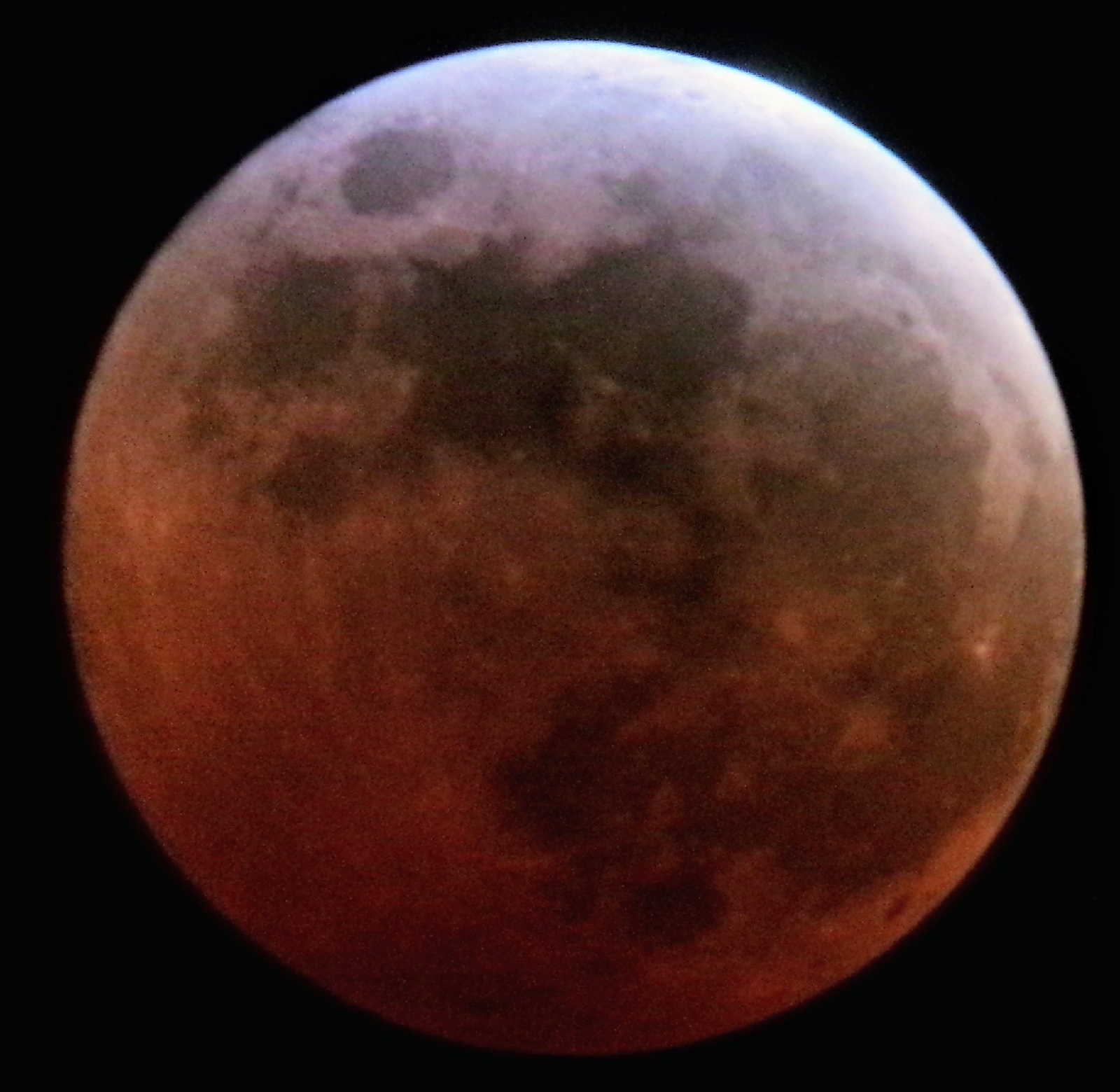
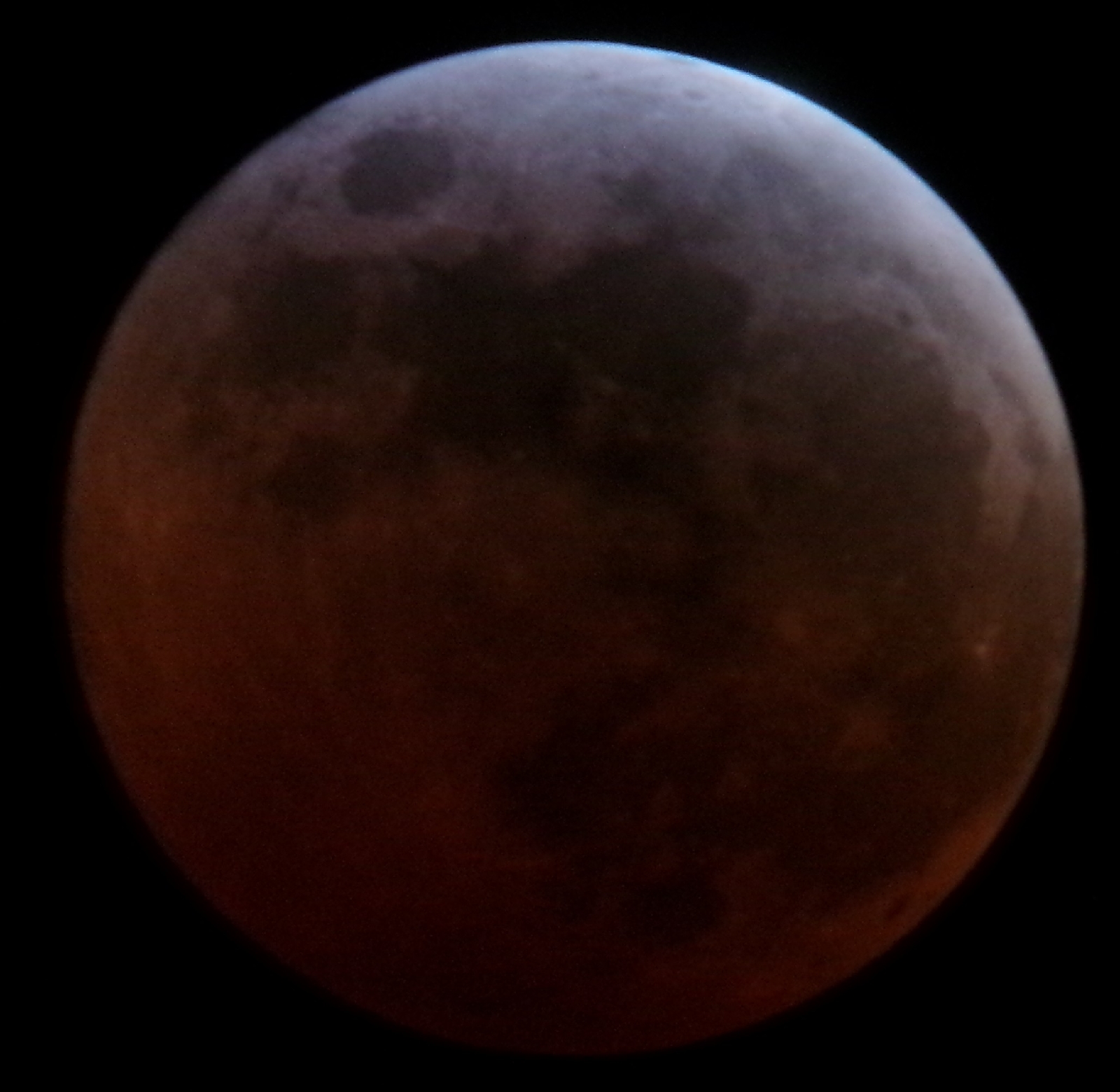
Red Moon

Last night's Lunar eclipse was a reminder of nature's wonders. 
Despite the stormy weather and rain, the skies eventually cleared in time, allowing us to witness the Moon's incredible transformation. It's a beautiful lesson in patience and acceptance sometimes the most breathtaking moments come after the storms.
It gets dark enough to see Star around the Moon.


martes, 13 de agosto de 2024

The Illumination of the First Quarter

I woke up at dawn to find the sky ablaze, as if the stars had found a new glow in the atmosphere. The first quarter of 2024 has been a gift to astronomers: optimal conditions for capturing the beauty of the universe.


The Objects That Illuminated the Night


The Moon: A lucid satellite, with a surface marked by craters and mountains. Its distance of 383,000 km made its light even more intense in our telescope (scientific fact: the lunar albedo is 12%). As a nighttime companion, it reminded me of the connection between my starry childhood and my passion for astronomy.


An Invitation to Observe


Astronomy is a daily adventure, full of surprises and discoveries. I invite everyone to join this quest for knowledge and the beauty of the universe. Next goal: capturing the meteor shower in July.

domingo, 23 de junio de 2024

CAPTURED: A Day on the Sun

Today, with ideal conditions, capture the Sun in its fullest state, like a painter in his favorite studio, savoring every touch of color and light. The three images we share are witnesses to the daily evolution of sunspots.


The Objects


Sunspots: They stand out in contrast to their intense brightness. (Size: 1000x1000 km)

Active Regions: Areas of strong magnetic activity that dance across the Sun's surface.

Solar Rotational Movement: The spots move across the Sun, like figures in a dynamic painting.


The Technical Challenge


Capturing these images requires precision and dedication. The sharpness of the image is a result of the balance between technology and human skill, but also of the favorable weather conditions that allowed us to record this spectacle.


A Call to Observation


Take advantage of this moment to contemplate the Sun in all its splendor. The next time you have the opportunity to point your telescope at the sun, prepare to be amazed by its mysteries and beauty.