Mostrando entradas con la etiqueta Moon. Mostrar todas las entradas

miércoles, 1 de abril de 2026

The Moon Calls Us: A Human Destiny

There are questions that have no easy answers, yet deserve to be asked. Why return to the Moon? 

Why now, when the world seems so broken, so divided, so urgently in need of attention down here?


Perhaps it is precisely because, in those moments when we feel smallest—most fragile, most lost in our own contradictions—that we most need to look upward.


I do not know if it was chance, destiny, the will of some forgotten god, or something infinitely stranger that placed the Moon at exactly the perfect distance to be reachable through effort, yet not with ease. At 384,400 kilometers—not so close as to be ignored, yet not so far as to make us give up. An invitation calculated with a precision that defies mere coincidence. A threshold. The first step of a staircase that vanishes into the darkness of the galaxy.


What is certain is that humanity has been dreaming of that step for nearly two thousand years.


In the second century AD, the Greek writer Lucian of Samosata penned the first detailed account of a journey to the Moon in the Western tradition—a work many also consider to be one of the earliest examples of science fiction in history. His work, Vera Historia—"True History"—remains the oldest known text to feature outer space travel, alien life forms, and interplanetary warfare.


With humor and satire, Lucian described a war between the inhabitants of the Sun and the Moon over the colonization of the Morning Star. It was fiction, yes. It was satire, too. But above all, it was the reflection of a human mind that could no longer confine its dreams within the visible horizon.


Two thousand years later, here we stand. And the question Lucian posed back in the second century remains as relevant as ever: 

What is stopping us from going?


For the past hundred years, the answer has invariably been the same combination of obstacles: impossible physics, non-existent materials, absent political will, or simply the weight of our own fears. Each solution seemed only to open up three new problems. Every breakthrough revealed a new layer of complexity. Reaching the Moon was, perhaps, the most difficult technical feat humanity has ever undertaken—not because the universe stood against us, but because we ourselves almost failed to try.


And yet, we did it.


And now, with Artemis II, we return. Not to plant a flag. Not to win a race. But to learn how to stay.


I sometimes think that if our only neighboring options were Venus or Mars—inhospitable, distant worlds, lacking that luminous, nearby presence in the night sky—perhaps we never would have had the courage to take the first step. The Moon taught us to dream of what lies just beyond our reach. It trained us to be travelers of the cosmos before becoming settlers of other worlds. It is the patient teacher that has been waiting for us.


I am fully aware that this planet bears open wounds. Wars that never end, inequalities that deepen, climate changes that will not wait. No amount of romanticism can mask those realities. And yet, I believe—with the same conviction with which my mother taught me to gaze at the sky when I was a child—that space exploration is not a luxury we can afford to forgo. It is, if anything, one of the few projects that has historically demonstrated that we are capable of working together, of solving the impossible, and of elevating the very best within us.


Artemis II is not an escape from our problems. It is a reminder of what we are capable of becoming when we decide that something is worth the effort.


Commander Reid Wiseman, Pilot Christina Koch, Mission Specialist Victor Glover, and Canadian astronaut Jeremy Hansen do not travel on behalf of a single nation. They travel on behalf of a species. An imperfect, contradictory, sometimes cruel species—yet one also capable of a tenderness, a creativity, and a courage that find no parallel anywhere else in the known universe.

Almost two thousand years ago, Lucian imagined humanity traversing the cosmos in ships swept along by whirlwinds. Today, it does so atop rockets that burn a million kilograms of propellant in eight minutes to escape the gravity of this beautiful world.


The dream remains the same. We have merely improved the engineering.


Let us accept the challenge. Not because it is easy, but because we have spent two thousand years preparing for it.


The Moon awaits us. And beyond it, the galaxy.

sábado, 31 de enero de 2026

Thought for the Day: Legacy and the Future by Francisco Silva.


If Artemis successfully lands on the Moon, the milestone won't be the landing itself, but what happens afterward: the end of space flights as isolated events. A successful program will demonstrate that we can operate beyond Earth on a recurring basis, not just once a generation.


The true transformation will occur when missions cease to be extraordinary milestones and become infrastructure; with reusable systems and global collaboration between nations and companies. Artemis does not seek to repeat the steps of Apollo, but to surpass them. Once the round trip is sustainable and repeatable, the Moon will cease to be the destination and become the starting point. That is its true promise: to open the door to an era of permanent human presence in the cosmos.


Image created by AI


viernes, 19 de diciembre de 2025

A new goal for humanity: Towards a permanent presence on the Moon


Space exploration has always been one of humanity's greatest collective achievements. It represents our innate curiosity, our ability to push boundaries, and our aspiration to unite in a greater purpose that transcends borders, ideologies, and differences. In that spirit, I enthusiastically celebrate the recent announcement accelerating the return of humans to the Moon and the establishment of a permanent base.


On December 18, 2025, an executive order was signed committing the United States to returning astronauts to the lunar surface by 2028 through the Artemis program and establishing the initial elements of a permanent lunar outpost by 2030. This plan includes the development of nuclear reactors for sustainable energy on the Moon, partnerships with the private sector, and preparations for future missions to Mars.


This progress comes at a pivotal moment, following NASA's celebration of the fifth anniversary of the Artemis Accords on November 20, 2025. These agreements, established in October 2020, have grown to include 59 nations, with the recent addition of Hungary, Malaysia, and the Philippines. This expansion reflects a growing global commitment to the peaceful, transparent, and responsible exploration of space, in a context where international cooperation is essential to prevent conflict and promote the common good.


NASA Acting Administrator Sean Duffy emphasized how the participation of these new signatories strengthens the global commitment to safe and peaceful exploration, especially at a time when some seek to militarize space. The Artemis Accords promote key principles such as non-interference in the space activities of others, mitigation of orbital debris, interoperability of systems for more efficient operations, and the release of scientific data. In September 2025, a meeting of leaders was held in Sydney, co-hosted by NASA with agencies from Australia and the United Arab Emirates, where global leaders discussed these topics, fostering transparency and information sharing.


In addition, NASA has announced a 2026 workshop for signatories, focused on transparency and data sharing regarding lunar missions, which will help prevent harmful interference. As an example of this collaboration, four CubeSats from South Korea, Saudi Arabia, Argentina, and Germany will fly on the Artemis II mission, demonstrating how diverse nations contribute to a shared effort.


Beyond the technical and strategic aspects—such as attracting private investment, modernizing launch infrastructure, and strengthening space security—what deeply inspires me is the human potential of this initiative. A permanent base on the Moon is not just a technical outpost: it is a step toward expanding human consciousness, a place from which we can observe our fragile Earth with new perspectives, foster innovations that benefit all of humanity (from medical advances to sustainable technologies), and remember that, in the vast cosmos, we are one species.

The Artemis program, with its emphasis on international collaboration and the involvement of the commercial sector, opens the door for more nations and companies to participate. Imagine: scientists from around the world working together on the lunar surface, sustainably extracting resources, building habitats that could serve as models for solving terrestrial challenges like resource scarcity or climate change. With the growth of the Artemis Accords—which have multiplied their number of signatories from just eight founders to 59 in five years—there is a clear surge in the global commitment to shaping a safe, peaceful, and prosperous future in space.


I wholeheartedly support a return to the Moon and the establishment of a permanent base there, not for nationalist or political reasons, but because it represents the next logical step in the evolution of our civilization. It is an investment in the future of humanity, in our scientific knowledge, in our technological capabilities, and, fundamentally, in our collective imagination.


At the same time, we must ensure that this new era of space exploration is conducted with the highest humanistic ideals. We must advocate for international cooperation, for peaceful exploration, for the open exchange of scientific knowledge, and for ensuring that the benefits of these technologies are widely shared. Space should be a frontier that unites humanity, not one that divides it.


At the same time, we must ensure that this new era of space exploration is conducted with the highest humanist ideals. We must advocate for international cooperation, for peaceful exploration, for the open exchange of scientific knowledge, and for ensuring that the benefits of these technologies are widely shared. Space must be a frontier that unites humanity, not one that divides it.


When the first person looks back at Earth from the windows of the permanent lunar base, they will see a world without visible borders, a beautiful and fragile planet floating in the void. This perspective, known as the "overview effect," has transformed every astronaut who has experienced it, giving them a profound appreciation for the unity of life and humanity.


Sources: Official White House and NASA press releases and specialized reports.

Images produced by Gemini and Copilot AI.


jueves, 6 de noviembre de 2025

A Night of Celestial Capture: An Adventure Journal

 The Supermoon That Refused to Leave

Last night, the sky offered us a spectacle that seemed straight out of an ancient dream: a Supermoon so large and luminous that it appeared to have descended a few steps closer to Earth, as if it wanted to speak to us.


And although its peak had already passed, it remained there, suspended with serene dignity, bathing the rooftops, the trees, and curious faces with a light that was neither entirely white nor entirely golden, but something in between: the color of memories that are never forgotten.


I stopped to look at it for a long time. Not in a hurry, not with the urgency to capture it in a photograph, but with the calm of someone listening to a story told in a soft voice. Because that's what it was: a story. One that spoke of cycles, of tides, of celestial bodies that attract and recede, but always return.


A Closer, More Human Moon

We call it a “supermoon” because its orbit brings it a little closer to us, and its apparent size increases. But what truly expands is our capacity for wonder. In that instant, the Moon ceases to be merely an astronomical object and becomes a mirror of our emotions: nostalgia, tenderness, a yearning for permanence.

From the perspective of Renaissance humanism, the Moon is not just a celestial body: it is an interlocutor. Galileo observed it with his rudimentary lenses and discovered that it had mountains and valleys, that it was neither perfect nor smooth as previously believed. And in that discovery, the sky ceased to be an immutable realm and became a territory shared with us, humankind.


An invitation to pause

Last night, that enormous Moon seemed to remind us of something essential: that even amidst the noise, the screens, the hectic schedules, there is beauty waiting to be contemplated. That looking at the sky is not a luxury, but a necessity of the soul.


And that even when it has passed its highest point, the Moon—like so many precious things in life—continues to shine. Not because it wants to be seen, but simply because it is.

sábado, 9 de agosto de 2025

Pic taken on the night of the 8 to the 9 of August 2025

 Captured the Moon in high detail at Waxing Gibbous at 100%.  


Craters, maria, and shadows—each telling a story billions of years old.  


Still can’t believe this view from my backyard.


Did you know? The Moon reaches “full” status when it’s directly opposite the Sun from Earth’s perspective. Even a few hours before or after, it’s still considered waxing gibbous.


viernes, 2 de mayo de 2025

A Night of Celestial Capture: An Adventure Journal

 I woke up at dawn, but it wasn't the light of dawn that called me to adventure. It was the Moon. It was May 1, 2025, and I was ready to capture the secrets of the universe.


The night was cool and serene, with ideal conditions for astronomical observation. I turned to my telescope, that great eye that allows me to discover the mysteries of the cosmos.


Captured:


The Moon, in its crescent phase (22%), shone with a soft, warm light, as if calling me to explore its secrets. (Science fact: the Moon is about 384,400 kilometers away from Earth.)


M13, a majestic star cluster with more than 300,000 stars crammed into a single celestial object. Its beauty took my breath away.


M81 and M82, two spiral galaxies that seemed to dance in the night sky, their spiral arms extending toward the stars beyond view. (Science fact: these galaxies are about 12 million light-years away.)


M106, a dwarf spiral galaxy, glided across the sky with a smoothness and elegance befitting the universe.


The stellar night is over, but the adventure lives on in my heart. Next goal: to capture an image of a supernova...

viernes, 14 de marzo de 2025

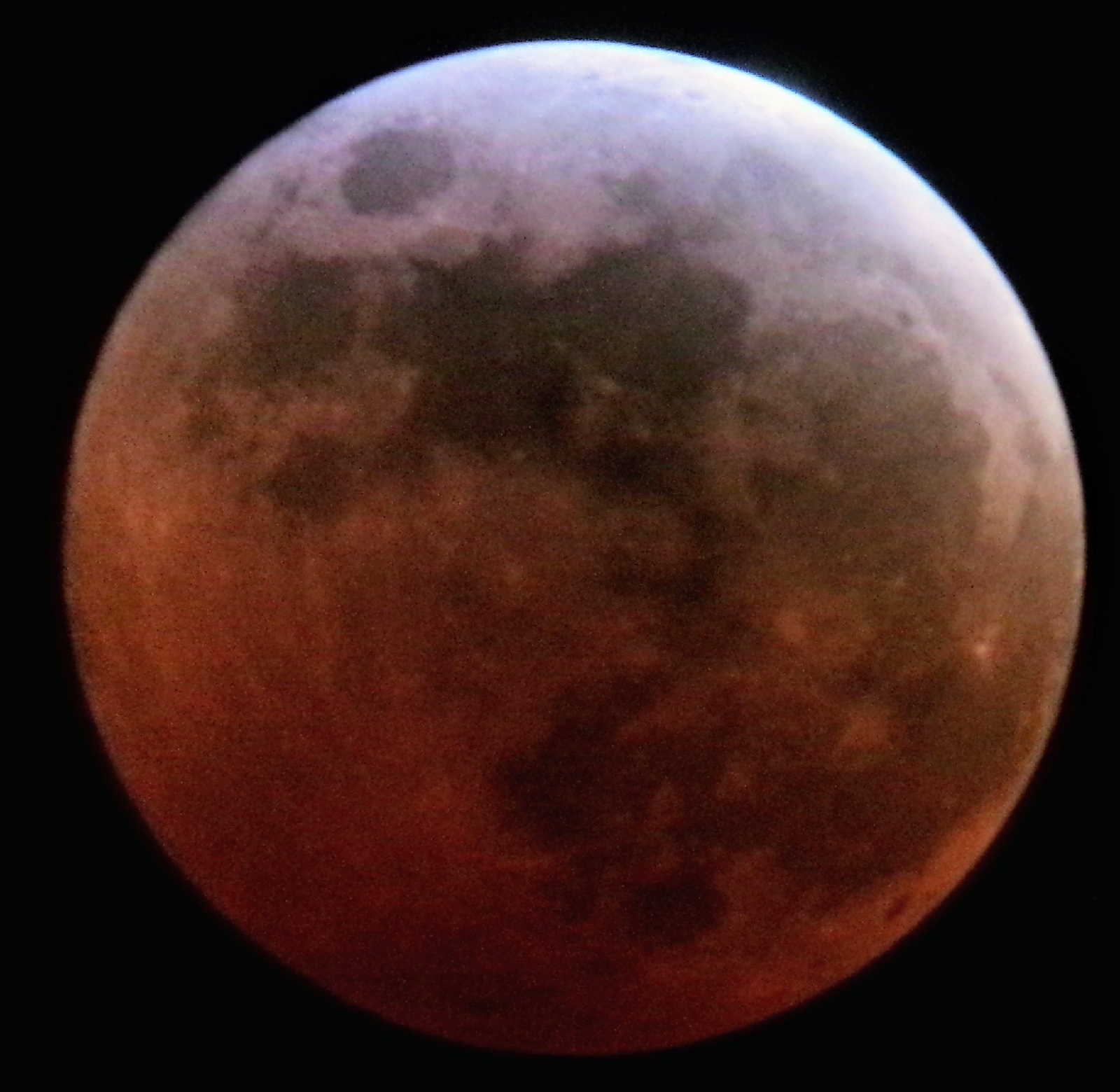
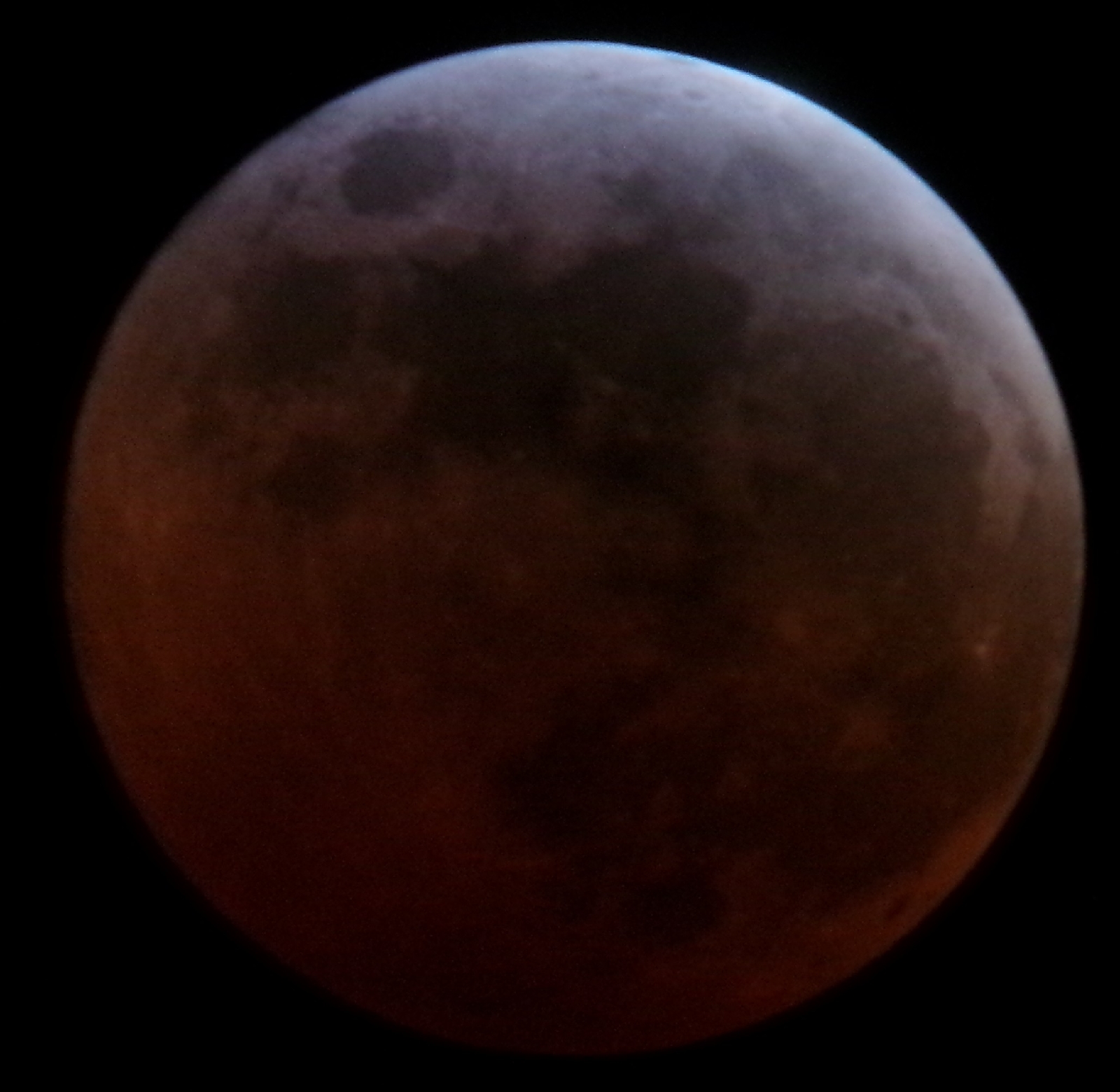
Red Moon

Last night's Lunar eclipse was a reminder of nature's wonders. 
Despite the stormy weather and rain, the skies eventually cleared in time, allowing us to witness the Moon's incredible transformation. It's a beautiful lesson in patience and acceptance sometimes the most breathtaking moments come after the storms.
It gets dark enough to see Star around the Moon.


martes, 13 de agosto de 2024

The Illumination of the First Quarter

I woke up at dawn to find the sky ablaze, as if the stars had found a new glow in the atmosphere. The first quarter of 2024 has been a gift to astronomers: optimal conditions for capturing the beauty of the universe.


The Objects That Illuminated the Night


The Moon: A lucid satellite, with a surface marked by craters and mountains. Its distance of 383,000 km made its light even more intense in our telescope (scientific fact: the lunar albedo is 12%). As a nighttime companion, it reminded me of the connection between my starry childhood and my passion for astronomy.


An Invitation to Observe


Astronomy is a daily adventure, full of surprises and discoveries. I invite everyone to join this quest for knowledge and the beauty of the universe. Next goal: capturing the meteor shower in July.

domingo, 16 de junio de 2024

The Moon in the Sky

 The Moon in the Sky


Today, under a burnished silver sky, the Moon rises like a crescent diadem, illuminating our world with its gibbous light. The night is dressed in brilliance and splendor, as the Moon reaches 65% illumination on June 15, 2024.


Captured:


The Illuminated Waxing Gibbous Moon: a cosmic spectacle that sparks curiosity. Its brightness increases as it approaches full moon, illuminating the shadows of our reality with its light.


Invitation to Observe


Want to witness this cosmic spectacle? Join me on the astronomical adventure! Connect with the universe and discover its secrets. The Moon, like a celestial message, invites us to explore the mysteries of the cosmos.


Next Goal


My next goal is to capture an image of the Meteor Shower in the night sky. Join me on this scientific adventure!

jueves, 23 de mayo de 2024

Full Moon, Heart of the Night

 The moon lit up the sky with a waxing gibbous smile, 99% of its light shining on May 22nd of last year. The night was a silk canvas, perfectly prepared for our adventure.


What's next?


The next opportunity to observe the waxing gibbous moon is soon. Don't miss the chance to immerse yourself in the magic of the universe and capture the moonlight. We'll be back soon with more astronomical adventures!


martes, 14 de junio de 2022

Thoughts:

Our natural satellite revolves around the Earth describing an elliptical orbit (as if we take a circle, flatten it a bit and give it the shape of a melon). Therefore, while the Moon revolves around our planet, there is a certain point in the lunar orbit that is farthest from Earth, called apogee, and another one that is closer, called perigee. The Moon takes approximately one month to complete a full revolution and in that period it will position itself one day at apogee and, a few days later, at perigee. On the other hand, we have the succession of the lunar phases. From Earth, as the Moon revolves around us, we will see how the Sun illuminates different areas of the lunar hemisphere visible from our planet every day. In full phase we see the Moon fully illuminated, 100% full of light reflected from the Sun because the three stars are aligned in this order: Sun, Earth and Moon. When it is full phase, like today, the Moon rises above the horizon when the Sun sets and is visible in the sky throughout the night.

The perigee moon occurs when the full moon phase coincides with the lunar perigee, or at least no more than 10% apart from this point. In such a situation, our satellite can be seen 14% larger and 30% brighter than any other full moon that does not coincide with perigee. But beware! Be very careful: we would need those two full moons in the sky at the same time to compare them and, most likely, we would not notice a difference.

The lunar perigee occurs on June 15, at 01:21 hop (official peninsular time, the one marked by our clocks) with the Moon at 357,434 km. from the earth. The full moon phase is today at 13:52 hop. Therefore, this coming night from Tuesday the 14th to Wednesday the 15th you can take a look to see if you can discern that the full moon looks bigger than any other full moon…

The perigee moon is a usual astronomical phenomenon that has occurred in the past, occurs today and will occur again in the future… next month, on the night of July 13-14, it will happen again. Do not let yourself be influenced by all the commotion that can be organized in the media with this astronomical event. By the way, supermoon is an astrological term (with ele) coined by an astrologer named Richard Nolle to dye as catastrophic the fact of the Moon-Earth closer proximity. It is a term that astronomers do not like at all because it is an unscientific astrological term and, therefore, lacking in any rigor. Do not use it and, please, do not let its use spread.

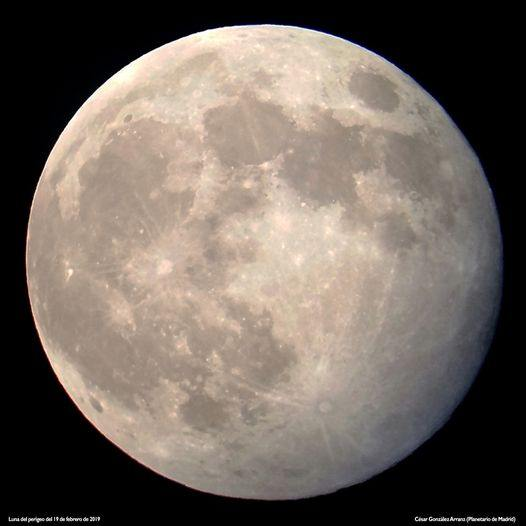
In the image you have the perigee moon that occurred on February 19, 2019, captured by our colleague César González using a mobile phone attached to the telescope located in the observation tower of the Planetarium.

Credit and image: César González Arranz (Madrid Planetarium).


miércoles, 31 de enero de 2018

Super Blue Blood Moon 2018

Hi, fellows of Cyberspace, today I want to share with you my photos, videos and the experience of seeing a Moon that has taken 150 years for all the following conditions to combine: Super Blue Blood Moon 2018 and during an Eclipse, as you can see the Moon has been very busy.


I ask for your forgiveness because the quality leaves much to be desired, the cameras are not the best and I have had to fight against the wind and the clouds, but it allows you to get an idea of how it was.


The part that I liked the most was the end, the combination of a desert and mountainous landscape illuminated by the first golden rails of the Sun, seeing the p inverted faces of the Moon, while being so close to the horizon offers us the illusion that It is larger than it was, mixing with thin dense, frayed clouds, of a dark gray, gliding in front of the Moon. Giving me the illusion of seeing a gaseous planet.


I will detail equipment that I have used:

3.0 MP web camera with 0.5 reduction focus

Canon EOS Rebel T3 12.2 MP CMOS Digital SLR Camera with 18-55 lens

Celestron telescope 114mm LCM, F9


I hope you like it

sábado, 14 de octubre de 2017

miércoles, 8 de octubre de 2014

Super Moon of 2014

After a cloudy night with lightning and some rain, I managed to photograph and record the Super Moon, I hope you like, in the recording you can see some clouds passing over it.
Our next appointment is on September 9 2014, will be the next Super Moon, I hope to be able to see it again and record, I will let you know.


miércoles, 6 de agosto de 2014

I observe the Moon

Tonight I was volunteering for Education Outreach Program (EOP) and I observe a Waxing Gibbous Moon, on august 6 2014, with my Meade DS-2114

This was my best photo


sábado, 6 de febrero de 2010

Around the Moon- Julio Verne

Original title: Autour de la Lune.

Is the continuation of The Moon Travel wing where Barbicanne Impey, Michel Ardan, Nochll. Into the bullet or racing car that would take them to the moon with all its equipment that Michel Ardan swelled with animals than anyone expected, but during the trip ran into a meteor that diverted them a few degrees preventing their landing that turned them on Moon when they completed their circumference discovering that you can not not-had inhabited water etc. And there was more that they were going to die in this state at the last minute decided to change your route on the moon falling but could be because when you turn on the rocket base the ship turned towards the earth with his incredible speed setting that would survive entry into the
atmosphere should fall into the water would shatter.

domingo, 6 de diciembre de 2009

From the Earth to the Moon-Julio Verne

Original title: De la Terre à la Lune

The story addresses the situation of inactivity, of the Gun Club. And remember its most splendid days, a conversation between some passionate tireless workers, who indulged in a ballistic calculations, and thought only to improve the weapons they already Avian created, but the absence of war, no a vow and put a plan in vain as some cause.
The Gun Club was founded in Baltimore, Maryland City during the American Civil War, military conflict that took place from 1861-1865; Between the United States of America (the Union and eleven states;.. Southern secessionists organized as the Confederate States of America (the Confederacy in the South East conflict is also known as; "war between the states" And another. most popular name is, "the Civil War".
In this time of conflict it was founded with the goal of creating weapons of all kinds, of all calibers and especially not unimaginable forces, exceeding the (European or the old Continent)
When everything seemed that the Gun Club was closing, comes a letter from President Impey Barbicane, asking them to join him in Baltimore, to make them aware of communication most important: It is carrying a projectile to "Luna" the idea was to fuck with enthusiasm by all members of the Gun Club, who were about five thousand people, the population of the United States generates.

Naturally you have to think about all the difficulties this entailed, astronomical, industrial, mechanical ... The time needed to build the missile and its cannon and especially economic, to be overcome before; "December 1 of the year following eleven least thirteen minutes and twenty seconds, we are October 7," and any delay would mean that they would wait 18 years for the "moon" was again under favorable conditions for the launch Missile.

A real adventure against time and especially when Michel Ardan, a French telegraph to President Impey Barbicane, asking to modify the projectile to allow the transport of a person, the news creates excitement around the world, and how do you the same character It happens to be accompanied by two other people. A real moon adventure !