Mostrando entradas con la etiqueta Celestial Capture. Mostrar todas las entradas

domingo, 20 de abril de 2025

Exploring the Cosmos from Red Rock, NV with the Seestar 50

Location: Camping in Red Rock, Nevada

Instrument: Seestar 50

Sky Conditions: Cloudless and windless, but with a not-so-transparent roof


Capturing the Wonders of Space

I recently had the opportunity to photograph some of the most fascinating objects in the night sky with my Seestar 50 telescope. The night in Red Rock, NV, was promising: clear skies and a stable atmosphere, although with a not-so-transparent roof, which somewhat affected the sharpness of the images.


The objects I observed include:

M42 (Orion Nebula): A spectacle of gas and forming stars.


M51 (Whirlpool Galaxy): Its spiral structure never ceases to amaze me.


M101 (Pinwheel Galaxy): A galaxy with defined arms and a bright center.


M44 (Benger Cluster): A swarm of young stars.


M81 (Bode's Galaxy): A sharp view of this stunning spiral.


NGC 2175 & IC 417: Two little-known but surprising objects.


M97 (Owl Nebula): A faint object with intriguing details.


NGC 2237 (Rosette Nebula): A rapidly evolving star garden.


M106 & M67: Two galactic gems with unique characteristics.


M4: A globular cluster that stands out among the stars.


Reflections on Observing

Despite the less-than-ideal sky conditions, every image I captured reflects the majesty of the universe. Astronomical observing isn't just about image quality, but also about timing, patience, and connection with the cosmos.


If you're interested in astrophotography, feel free to try darker skies and experiment with different filters to improve your capture. Do you have any tips or similar experiences? Let me know in the comments!


viernes, 14 de marzo de 2025

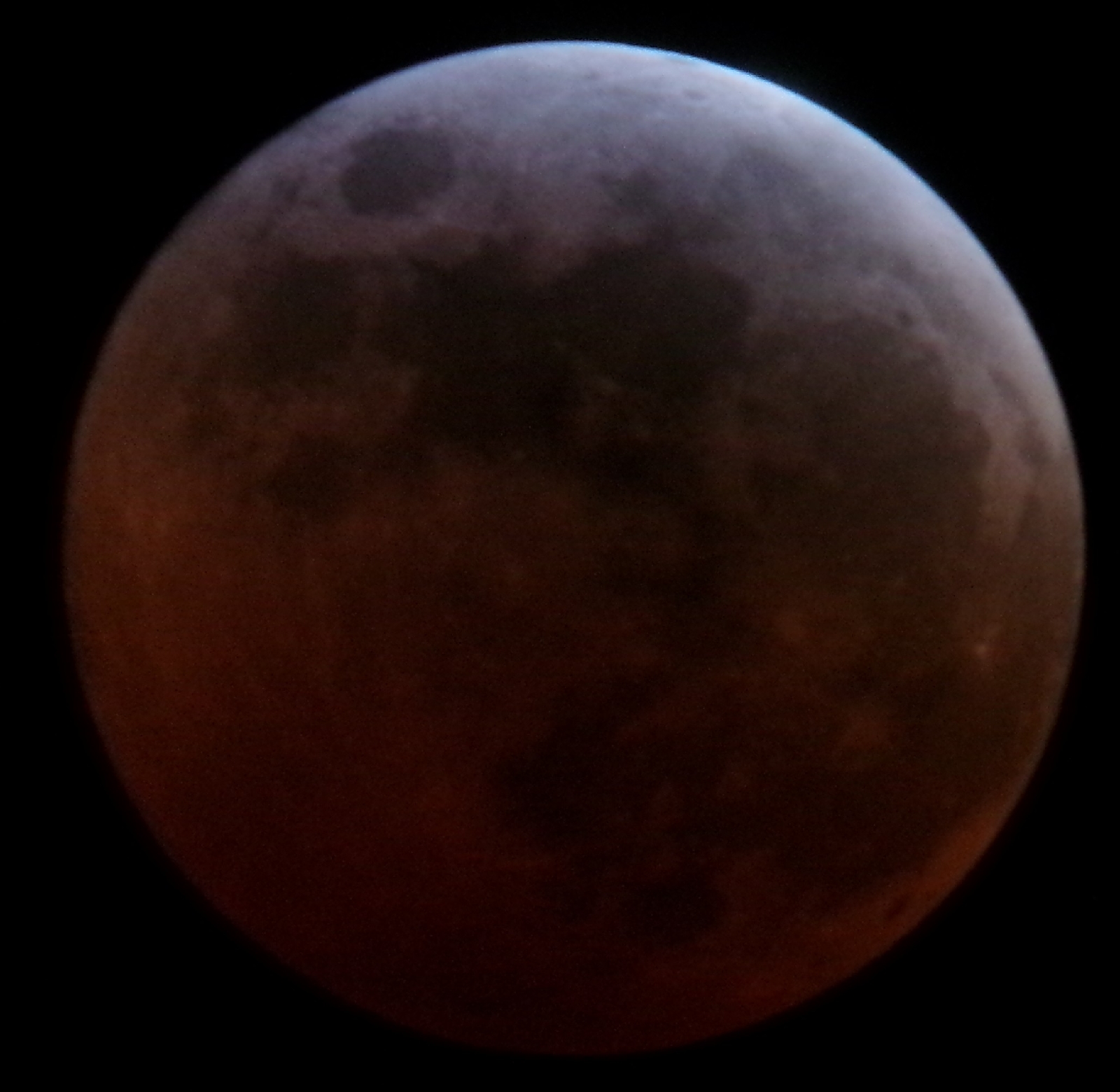
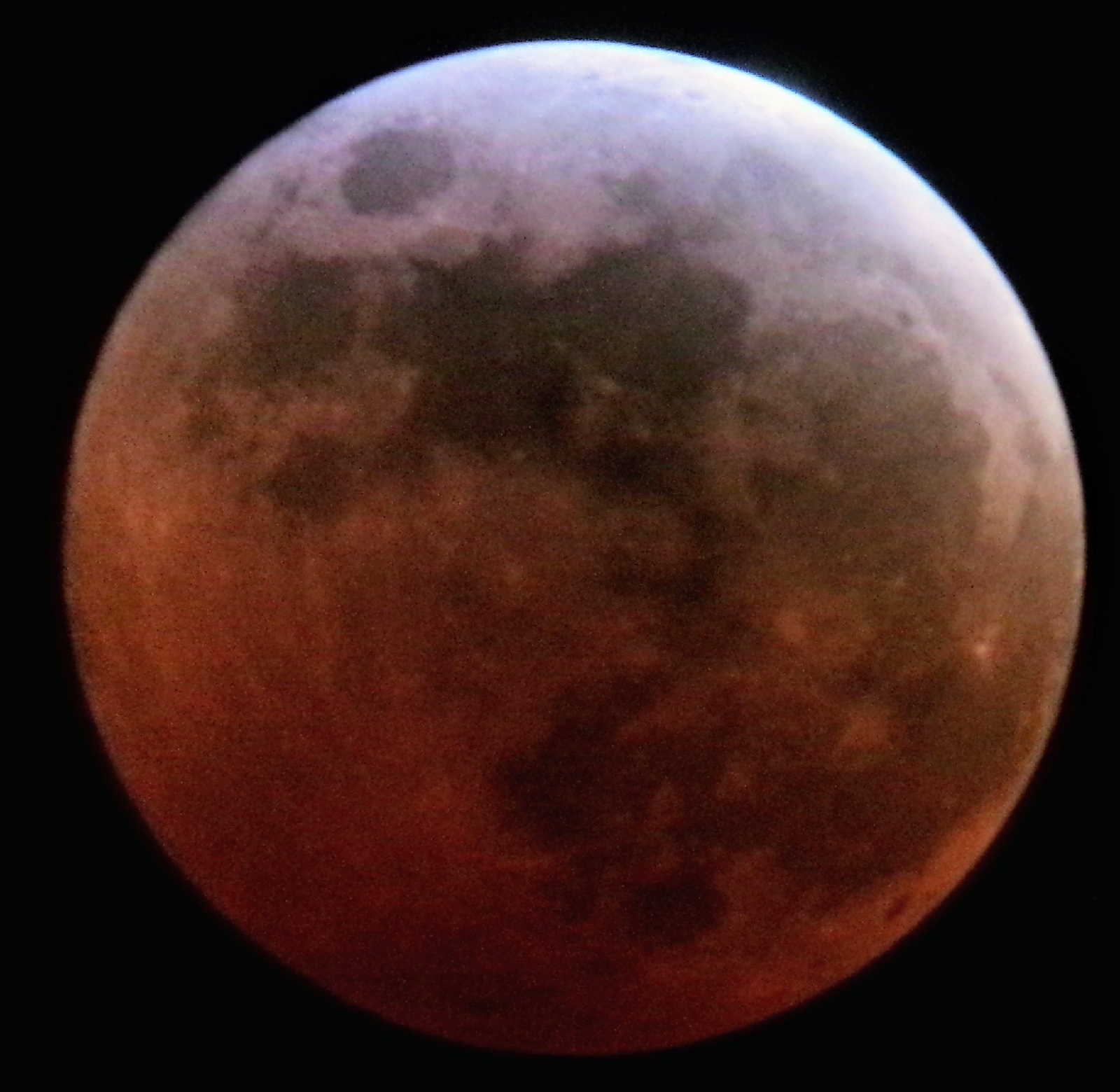
Red Moon

Last night's Lunar eclipse was a reminder of nature's wonders. 
Despite the stormy weather and rain, the skies eventually cleared in time, allowing us to witness the Moon's incredible transformation. It's a beautiful lesson in patience and acceptance sometimes the most breathtaking moments come after the storms.
It gets dark enough to see Star around the Moon.


martes, 13 de agosto de 2024

The Illumination of the First Quarter

I woke up at dawn to find the sky ablaze, as if the stars had found a new glow in the atmosphere. The first quarter of 2024 has been a gift to astronomers: optimal conditions for capturing the beauty of the universe.


The Objects That Illuminated the Night


The Moon: A lucid satellite, with a surface marked by craters and mountains. Its distance of 383,000 km made its light even more intense in our telescope (scientific fact: the lunar albedo is 12%). As a nighttime companion, it reminded me of the connection between my starry childhood and my passion for astronomy.


An Invitation to Observe


Astronomy is a daily adventure, full of surprises and discoveries. I invite everyone to join this quest for knowledge and the beauty of the universe. Next goal: capturing the meteor shower in July.

domingo, 23 de junio de 2024

CAPTURED: A Day on the Sun

Today, with ideal conditions, capture the Sun in its fullest state, like a painter in his favorite studio, savoring every touch of color and light. The three images we share are witnesses to the daily evolution of sunspots.


The Objects


Sunspots: They stand out in contrast to their intense brightness. (Size: 1000x1000 km)

Active Regions: Areas of strong magnetic activity that dance across the Sun's surface.

Solar Rotational Movement: The spots move across the Sun, like figures in a dynamic painting.


The Technical Challenge


Capturing these images requires precision and dedication. The sharpness of the image is a result of the balance between technology and human skill, but also of the favorable weather conditions that allowed us to record this spectacle.


A Call to Observation


Take advantage of this moment to contemplate the Sun in all its splendor. The next time you have the opportunity to point your telescope at the sun, prepare to be amazed by its mysteries and beauty.

jueves, 23 de mayo de 2024

Full Moon, Heart of the Night

 The moon lit up the sky with a waxing gibbous smile, 99% of its light shining on May 22nd of last year. The night was a silk canvas, perfectly prepared for our adventure.


What's next?


The next opportunity to observe the waxing gibbous moon is soon. Don't miss the chance to immerse yourself in the magic of the universe and capture the moonlight. We'll be back soon with more astronomical adventures!


lunes, 18 de febrero de 2019

HIP 37826 Pólux (Star)

File Data


Photo by: Francisco Silva
Scheduled by: You
Observation date: Friday, January 25, 2019
Observation time: 3:03 pm EST / 12:03 pm PST / 20:03 UTC
Observatory: Slooh Canary Islands
Telescope: Canary Two
Instrument: Canary Wide-Field


Photo by: Francisco Silva
Scheduled by: You
Observation date: Friday, January 25, 2019
Observation time: 2:59 pm EST / 11:59 am PST / 19:59 UTC
Observatory: Slooh Canary Islands
Telescope: Canary Two
Instrument: Canary Wide-Field


Photo by: Francisco Silva
Scheduled by: You
Observation date: Friday, January 25, 2019
Observation time: 2:59 pm EST / 11:59 am PST / 19:59 UTC
Observatory: Slooh Canary Islands
Telescope: Canary Two
Instrument: Canary Ultra-Wide-Field

lunes, 30 de abril de 2018

Jupiter

Hello fellows of Cyberspace, today I want to share these astrophotographs that I have taken of Jupiter.


Photo by: Francisco Silva
Scheduled by: You
Observation date: Sunday, February 25, 2018
Observation time: 2:04am EST / 11:04pm PST / 07:04 UTC
Observatory: Slooh Chile
Telescope: Chile One
Instrument: Chile Ultra Wide-Field


Photo by: Francisco Silva
Scheduled by: You
Observation date: Sunday, February 25, 2018
Observation time: 2:05am EST / 11:05pm PST / 07:05 UTC
Observatory: Slooh Chile
Telescope: Chile One
Instrument: Chile Ultra Wide-Field


Photo by: Francisco Silva
Scheduled by: You
Observation date: Sunday, February 25, 2018
Observation time: 2:05am EST / 11:05pm PST / 07:05 UTC
Observatory: Slooh Chile
Telescope: Chile One
Instrument: Chile Wide-Field


Photo by: Francisco Silva
Scheduled by: You
Observation date: Sunday, February 25, 2018
Observation time: 2:08am EST / 11:08pm PST / 07:08 UTC
Observatory: Slooh Chile
Telescope: Chile One
Instrument: Chile Wide-Field


martes, 20 de marzo de 2018

Step from winter to spring

The equinoxes (from the Latin aequinoctium (aequus nocte), "equal night") are the times of the year when the Sun is located in the plane of the celestial equator. That day and for an observer on the terrestrial equator, the Sun reaches the zenith (the highest point in the sky in relation to the observer, which is just above his head, that is, at 90 °). The parallel of declination of the Sun and the celestial equator then coincide.

It occurs twice a year: on March 20 or 21 and on September 22 or 23 of each year.

On the dates when the equinoxes occur, the day lasts approximately equal to that of the night in all places on Earth. Although the word equinox refers to an equality, this is not the case due to the size of the sun (with respect to its central point), and atmospheric refraction, which causes differences in the duration of the day at different latitudes.

At the equinox, the opposite annual season change occurs in each hemisphere of the Earth.
In astronomy it is called the Aries point or vernal point to the point of the ecliptic from which the sun passes from the southern celestial hemisphere to the northern hemisphere, which occurs at the March equinox (beginning spring in the northern hemisphere) and autumn in the southern hemisphere). The planes of the celestial equator and the ecliptic (the plane formed by the Earth's orbit around the sun or the apparent movement of the sun over a year) are cut into a straight line, which has the Aries point at one end. the end diametrically opposite the Libra point.
Actually, none of the equinoxes is in the constellation that names them, due to the precession: the first point of Aries is in Pisces.
Happy Spring


lunes, 19 de febrero de 2018

Hubble Variable Nebula NGC 2261

Hi, fellows of Cyberspace, today I want to share these astrophotographs that I have taken to NGC 2261 through the Slooh telescope network. These photos are with the Chile Uno telescope.

This object is also known by the names of the Hubble Variable Nebula or Caldwell 46. This variable nebula that is in the constellation of Monoceros, is illuminated by a star that we can not see called R Monocerotis (R Mon). This star is massive, it is located at the southern extremity of the nebula, it is a very young Tauri with about 300,000 years, it can be about ten times the mass of our star the Sun. It is about 2500 years away.

NGC 2261 was photographed for the first time through the Hale telescope at the Palomar Observatory by Edwin Hubble on January 26, 1949. A proposed example for variability is that dust clouds near R Mon periodically block the star's illumination.


File Data
Photo by: Francisco Silva
Scheduled by: PeterI.2013
Observation date: Thursday, February 15, 2018
Observation time: 9:22pm EST / 6:22pm PST / 02:22 UTC
Observatory: Slooh Chile
Telescope: Chile One
Instrument: Chile Wide-Field

File Data
Photo by: Francisco Silva
Scheduled by: PeterI.2013
Observation date: Thursday, February 15, 2018
Observation time: 9:22pm EST / 6:22pm PST / 02:22 UTC
Observatory: Slooh Chile
Telescope: Chile One
Instrument: Chile Wide-Field

File Data
Photo by: Francisco Silva
Scheduled by: PeterI.2013
Observation date: Thursday, February 15, 2018
Observation time: 9:27pm EST / 6:27pm PST / 02:27 UTC
Observatory: Slooh Chile
Telescope: Chile One
Instrument: Chile Wide-Field

File Data
Photo by: Francisco Silva
Scheduled by: PeterI.2013
Observation date: Thursday, February 15, 2018
Observation time: 9:26pm EST / 6:26pm PST / 02:26 UTC
Observatory: Slooh Chile
Telescope: Chile One
Instrument: Chile Ultra Wide-Field

File Data
Photo by: FranciscoS.2017
Scheduled by: PeterI.2013
Observation date: Thursday, February 15, 2018
Observation time: 9:25pm EST / 6:25pm PST / 02:25 UTC
Observatory: Slooh Chile
Telescope: Chile One
Instrument: Chile Ultra Wide-Field

miércoles, 31 de enero de 2018

Super Blue Blood Moon 2018

Hi, fellows of Cyberspace, today I want to share with you my photos, videos and the experience of seeing a Moon that has taken 150 years for all the following conditions to combine: Super Blue Blood Moon 2018 and during an Eclipse, as you can see the Moon has been very busy.


I ask for your forgiveness because the quality leaves much to be desired, the cameras are not the best and I have had to fight against the wind and the clouds, but it allows you to get an idea of how it was.


The part that I liked the most was the end, the combination of a desert and mountainous landscape illuminated by the first golden rails of the Sun, seeing the p inverted faces of the Moon, while being so close to the horizon offers us the illusion that It is larger than it was, mixing with thin dense, frayed clouds, of a dark gray, gliding in front of the Moon. Giving me the illusion of seeing a gaseous planet.


I will detail equipment that I have used:

3.0 MP web camera with 0.5 reduction focus

Canon EOS Rebel T3 12.2 MP CMOS Digital SLR Camera with 18-55 lens

Celestron telescope 114mm LCM, F9


I hope you like it

lunes, 18 de diciembre de 2017

Open cluster M35 or NGC 2168

Hello fellows of Cyberspace, today I want to share these astrophotographs that I have taken of M35 through the network of telescopes of Slooh these photos are with the telescope Canary Three
Is an open cluster in the constellation Gemini. It was discovered by Philippe Loys de Chéseaux in 1745 and independently discovered by John Bevis before 1750. The cluster is scattered over an area of the sky almost the size of the full moon and is located (2,800 light-years) from Earth.

We can Appreciate the lower right to NGC 2158 is the group of yellow stars.

I hope you like it


Photo by: Francisco Silva
Observation date: Sunday, December 10, 2017
Observation time: 21:25 UTC
Observatory: Slooh Canary Islands
Telescope: Canary Three
Instrument: Canary Deep Sky


Photo by: Francisco Silva
Observation date: Sunday, December 10, 2017
Observation time:  21:26 UTC
Observatory: Slooh Canary Islands
Telescope: Canary Three
Instrument: Canary Deep Sky


Photo by: Francisco Silva
Observation date: Sunday, December 10, 2017
Observation time: 21:28 UTC
Observatory: Slooh Canary Islands
Telescope: Canary Three
Instrument: Canary Deep Sky

lunes, 11 de diciembre de 2017

Open cluster M37 or NGC 2099


Hello fellows of Cyberspace, today I want to share these astrophotographs that I have taken to the M37 Open Cluster through the Slooh telescope network. These photos are with the Canario Uno telescope.
It can be seen that it is the richest open cluster in the Auriga constellation. It was discovered by Giovanni Batista Hodierna before 1654.
Its estimated distance ranges between 3600 and 4700 light years, with a real diameter between 20 and 25 light years.It contains several Delta Scuti variable stars (such as V6, V8 or V11), two eclipsing binaries Algolidas of type EA (V1 and V2, of periods not determined to date ), three eclipsing binaries of type EW (V3, V4 and V7) and several red binary spectroscopic giants. Sofar  no extrasolar planets have been discovered in the cluster.I hope you like it
Photo information:
Photo by: Francisco SilvaDate of observation: Sunday, December 10, 2017Observation time: 21:02 UTCObservatory: Slooh Canary IslandsTelescope: Canary OneInstrument: half a canary meter